How Mesh Fabric Keeps Athletes Cool: Breathability, Moisture Management and Fabric Engineering
Behind every high-performance jersey is a carefully engineered mesh structure. How open-knit construction, fiber choice and weight work together.
When an athlete's body temperature rises during exercise, the fabric they wear either helps or hinders cooling. Mesh fabric is engineered to help - but not all mesh is created equal. The key variables are structure, weight, and fiber composition.
Why mesh breathes: the physics of open-knit construction
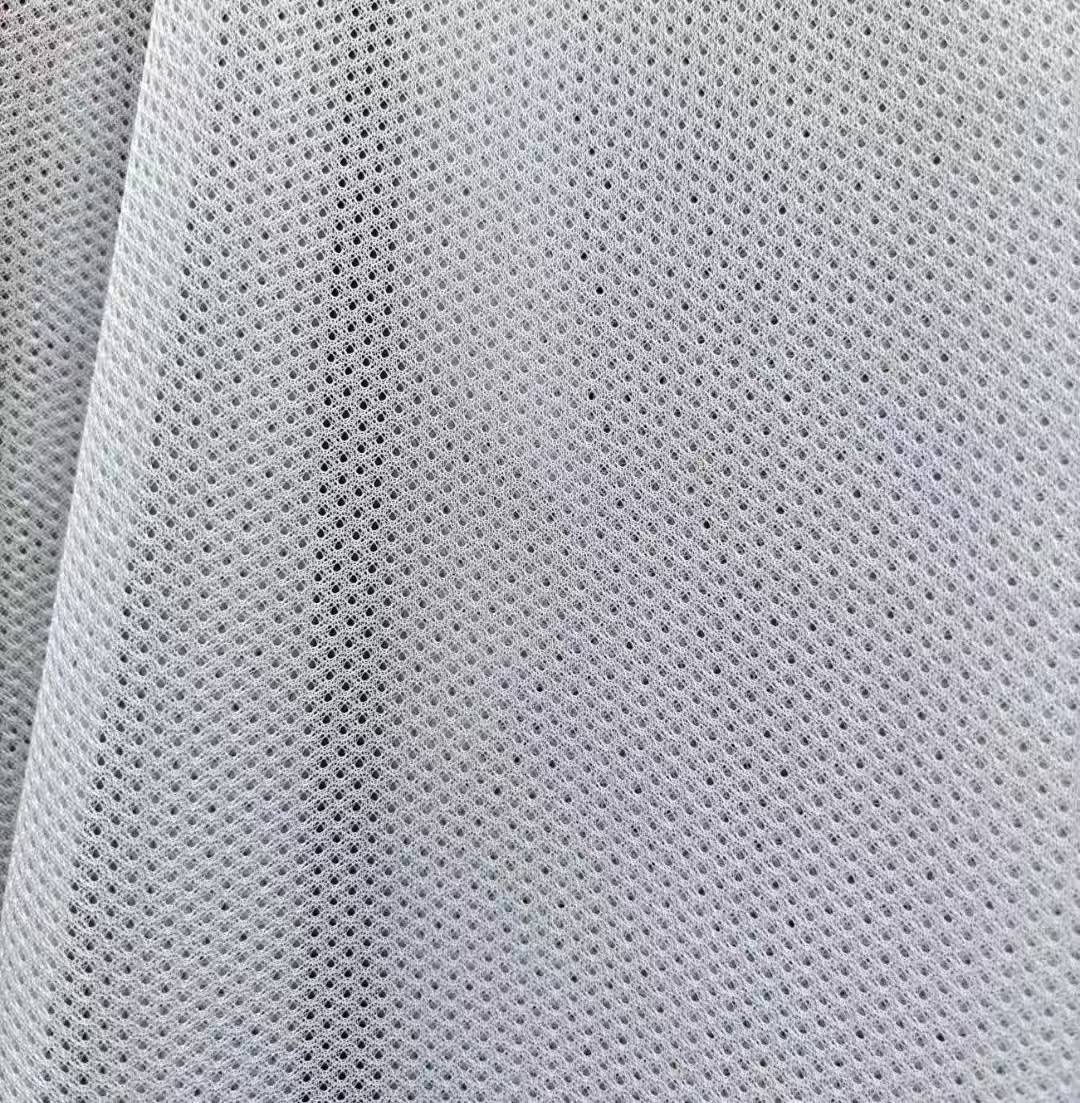
Solid woven fabrics block airflow. Mesh fabrics do the opposite: their open-knit structure creates continuous air channels from the inside of the garment to the outside. When the wearer moves, air pumps through these channels, carrying heat and water vapor away from the skin.
The size and density of the mesh holes determine how much air passes through. Our eyelet mesh series - from ultra-light 50D (65 gsm) to mid-weight 75D (110 gsm) - is designed with progressively larger ventilation zones for different intensity levels.
Weight and coverage: less is more (usually)
Lighter mesh means more open space and better airflow. A 65 gsm eyelet is ideal for underwear lining where minimal coverage and maximum ventilation are the priorities. At the other end, 210 gsm eyelet provides more coverage while still allowing airflow through the mesh holes - suitable for outer layers and structured sportswear.
The sweet spot for most sportswear tops is 125-180 gsm, which balances coverage, durability and breathability.
Moisture management: fiber choice matters
100% polyester is the standard for sports mesh because it is hydrophobic - it does not absorb water. Sweat passes through the fiber rather than soaking into it, so the fabric dries fast. Adding spandex (typically 10-20%) gives stretch for fitted garments but slightly reduces the moisture transport rate.
For buyers choosing between compositions, the rule of thumb is: 100% polyester for maximum wicking, polyester-spandex blends for garments that need to stretch with the body.
Beyond single-layer: engineered mesh systems
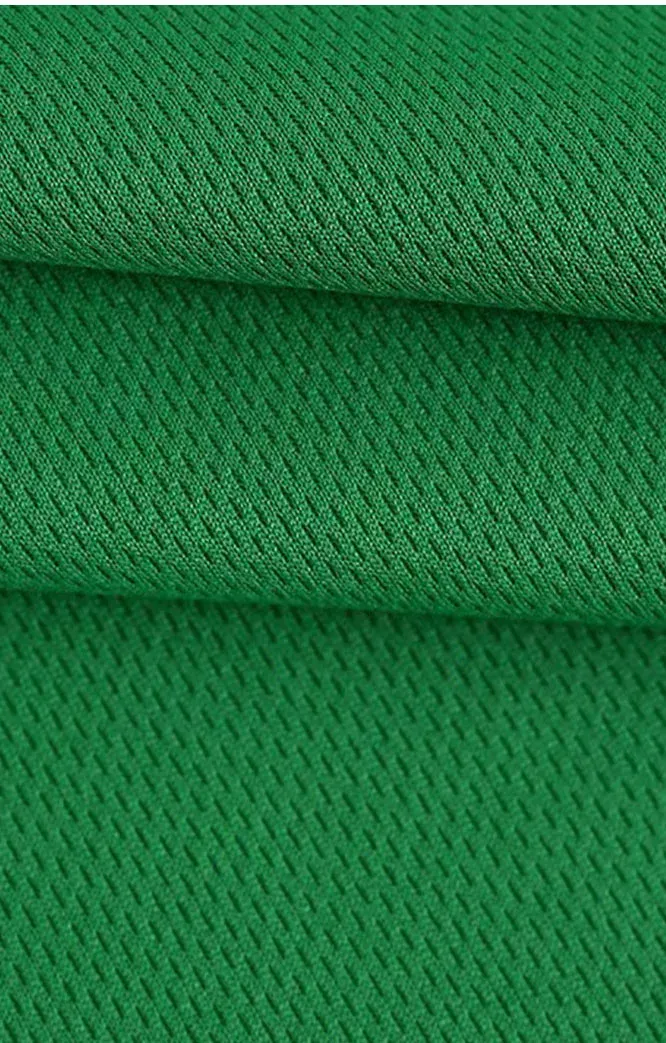
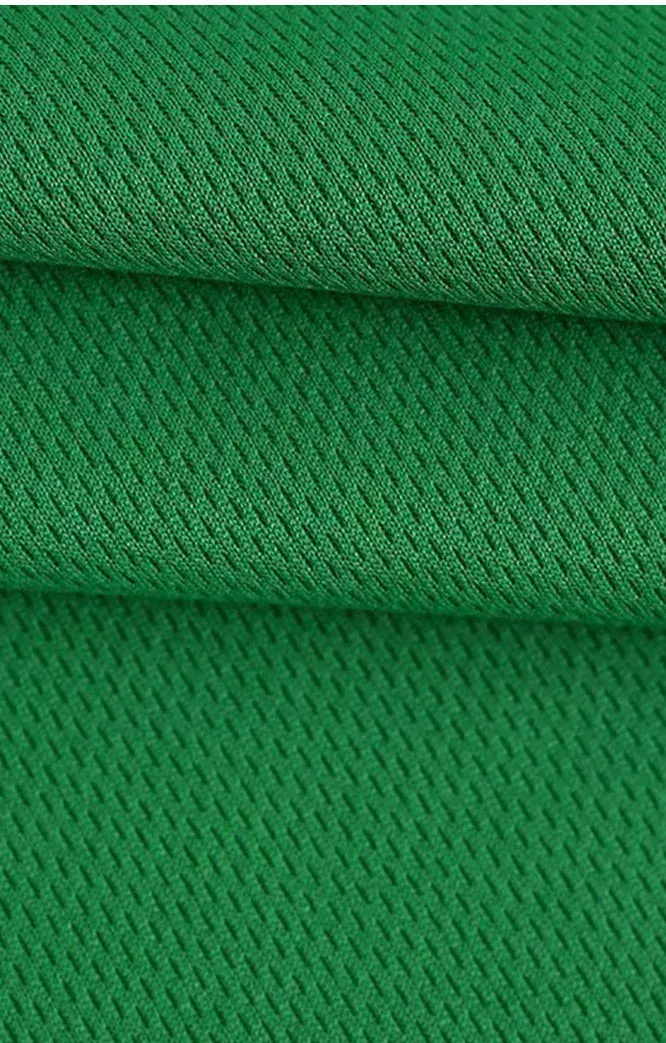
Advanced sportswear uses different mesh types in different zones of the same garment - a technique called body mapping. Light eyelet under the arms for maximum ventilation, a denser mesh on the chest for structure, and a stretch mesh on the sides for fit. Our program covers all the mesh types needed for body-mapped construction, from 50D to 150D eyelet, honeycomb, bird's eye, and engineered stretch mesh.
Sourcing mesh that performs
The most reliable way to confirm breathability is to test the fabric. We provide swatches and ready-made color cards before bulk so buyers can evaluate the airflow, hand feel and moisture behavior in their own lab or wear trial.
Contact Liloom Textile through the inquiry form to discuss your sportswear mesh requirements - we confirm specs, colors and lead times within one business day.When an athlete's body temperature rises during exercise, the fabric they wear either helps or hinders cooling. Mesh fabric is engineered to help - but not all mesh is created equal. The key variables are structure, weight, and fiber composition.
Why mesh breathes: the physics of open-knit construction
Solid woven fabrics block airflow. Mesh fabrics do the opposite: their open-knit structure creates continuous air channels from the inside of the garment to the outside. When the wearer moves, air pumps through these channels, carrying heat and water vapor away from the skin.
The size and density of the mesh holes determine how much air passes through. Our eyelet mesh series - from ultra-light 50D (65 gsm) to mid-weight 75D (110 gsm) - is designed with progressively larger ventilation zones for different intensity levels.
Weight and coverage: less is more (usually)
Lighter mesh means more open space and better airflow. A 65 gsm eyelet is ideal for underwear lining where minimal coverage and maximum ventilation are the priorities. At the other end, 210 gsm eyelet provides more coverage while still allowing airflow through the mesh holes - suitable for outer layers and structured sportswear.
The sweet spot for most sportswear tops is 125-180 gsm, which balances coverage, durability and breathability.
Moisture management: fiber choice matters
100% polyester is the standard for sports mesh because it is hydrophobic - it does not absorb water. Sweat passes through the fiber rather than soaking into it, so the fabric dries fast. Adding spandex (typically 10-20%) gives stretch for fitted garments but slightly reduces the moisture transport rate.
For buyers choosing between compositions, the rule of thumb is: 100% polyester for maximum wicking, polyester-spandex blends for garments that need to stretch with the body.
Beyond single-layer: engineered mesh systems
Advanced sportswear uses different mesh types in different zones of the same garment - a technique called body mapping. Light eyelet under the arms for maximum ventilation, a denser mesh on the chest for structure, and a stretch mesh on the sides for fit. Our program covers all the mesh types needed for body-mapped construction, from 50D to 150D eyelet, honeycomb, bird's eye, and engineered stretch mesh.
Sourcing mesh that performs
The most reliable way to confirm breathability is to test the fabric. We provide swatches and ready-made color cards before bulk so buyers can evaluate the airflow, hand feel and moisture behavior in their own lab or wear trial.
Contact Liloom Textile through the inquiry form to discuss your sportswear mesh requirements - we confirm specs, colors and lead times within one business day.